

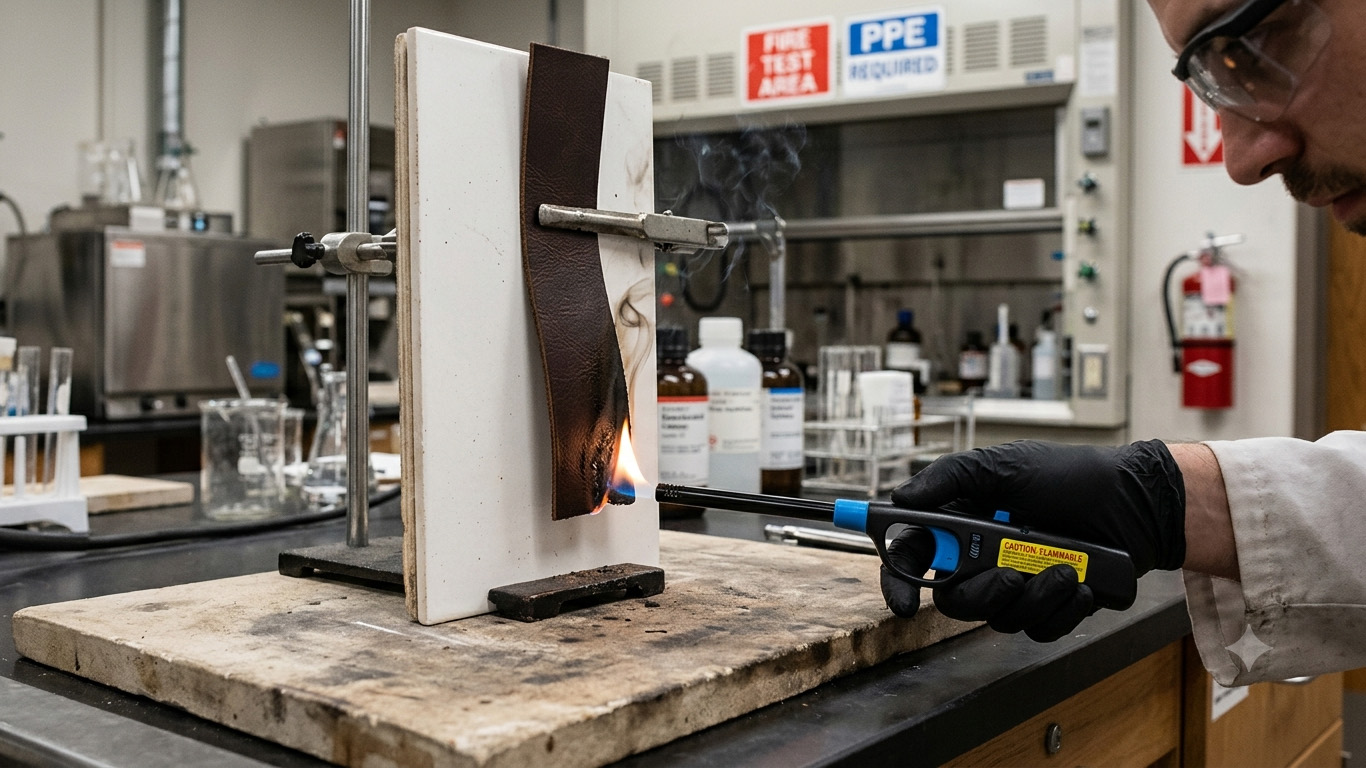
Does Leather Actually Burn? The Truth Behind the “Lighter Test”
If you have ever purchased leather goods or watched promotional videos from leather sellers, you have almost certainly seen the infamous “Fire Test”. A seller holds a cigarette lighter flame directly against a leather wallet, belt, or jacket for three to five seconds, pulls it away unscathed, and confidently declares: “Look! Real leather does not burn!”
While this demonstration looks convincing to unsuspecting buyers, it presents a misleading myth. The scientific reality is simple: Genuine leather DOES burn.
To understand why this myth persists and how to distinguish real leather from fake alternatives, we need to look at the material science behind heat exposure.
Why Artificial Leather Melts Instantly
Artificial leather—commonly sold as PU (Polyurethane) leather, PVC leather, or synthetic leather—is manufactured using synthetic plastic polymers bonded to a fabric backing.
Plastics have a relatively low melting point and are petroleum-derived hydrocarbons. When exposed to an open flame:
- Immediate Melting: The plastic coating liquefies almost instantly.
- Rapid Ignition: Plastic acts as fuel for the flame, catching fire very quickly.
- Toxic Fumes & Shrinkage: As it melts, it curls rapidly, releasing sharp chemical smells and toxic black smoke.
How Genuine Leather Resists Heat (And Why It Still Burns)
Genuine leather is made from animal hide, which consists primarily of dense, woven collagen protein fibers. Protein-based organic materials behave very differently under heat compared to plastics:
- Short-Term Heat Resistance (3 to 5 Seconds): When exposed to a flame briefly, leather absorbs and dissipates the heat across its dense fiber network. It does not ignite or melt in a split second, which allows sellers to perform their 3-second lighter trick without immediate damage.
- Sustained Heat Exposure (10+ Seconds): If you hold a lighter against genuine leather for longer than a few seconds, the moisture in the leather evaporates. The leather will start to char, shrink, harden, and curl.
- High Temperatures & Fire: At temperatures between 200°C and 300°C (392°F–572°F), the collagen structure breaks down completely. Leather will catch fire, burn slowly, emit an odor similar to burning hair (a characteristic signature of organic protein), and leave behind carbon ash.
Heat Resistant vs. Fireproof: The Final Verdict
Saying “Leather does not burn” is factually incorrect. Leather is flame-retardant and heat-resistant, but it is NOT fireproof.
The lighter test simply proves that the material is not made of plastic—it does not prove that leather is immune to fire. Marketing it as “unburnable” is a gimmick that misinforms consumers about the true properties of natural leather.
Bangla Version (বাংলা সংস্করণ)
চামড়া কি সত্যিই পোড়ে না? “লাইটার টেস্ট”-এর আসল সত্য
আপনি যদি কখনো চামড়ার তৈরি পণ্য কিনতে যান অথবা সোশ্যাল মিডিয়ায় লেদার প্রোডাক্টের বিজ্ঞাপনী ভিডিও দেখে থাকেন, তবে নিশ্চয়ই “ফায়ার টেস্ট” বা লাইটার টেস্ট দেখে থাকবেন। বিক্রেতারা কোনো লেদার বেল্ট, ওয়ালেট বা জ্যাকেটের গায়ে গ্যাসলাইটারের শিখা ৩-৫ সেকেন্ড ধরে রেখে দেখান এবং বেশ জোর দিয়েই দাবি করেন: “দেখুন, আসল চামড়া আগুনে পোড়ে না!”
আপাতদৃষ্টিতে এই পরীক্ষাটি খুব আকর্ষণীয় মনে হলেও, এটি একটি ভুল ও বিভ্রান্তিকর ধারণা। বৈজ্ঞানিক সত্য হলো: আসল চামড়াও পোড়ে এবং নির্দিষ্ট তাপমাত্রায় এতে আগুন ধরে।
কেন এই ভুল ধারণাটি তৈরি হলো এবং আসল ও কৃত্রিম চামড়ার আচরণের আসল পার্থক্য কী, তা বুঝতে তাদের উপাদান ও রসায়ন জানা প্রয়োজন।
কৃত্রিম চামড়া (PU/PVC Leather) কেন সাথে সাথে গলে যায়?
কৃত্রিম বা আর্টিফিশিয়াল লেদার (যেমন: PU – Polyurethane বা PVC – Polyvinyl Chloride) মূলতঃ পেট্রোলাইয়ামভিত্তিক প্লাস্টিকের পাতলা প্রলেপ দিয়ে তৈরি করা হয়।
প্লাস্টিকের গলনাঙ্ক অনেক কম হওয়ায় এবং তা দাহ্য হওয়ায় আগুনের সংস্পর্শে এলে:
- দ্রুত গলে যাওয়া: লাইটারের ছোঁয়া লাগা মাত্রই প্লাস্টিকের লেয়ারটি গলে পেঁচিয়ে যায়।
- সহজে আগুন ধরে যাওয়া: প্লাস্টিক নিজেই জ্বালানি হিসেবে কাজ করে দ্রুত আগুন ছড়িয়ে দেয়।
- বিষাক্ত ধোঁয়া ও গন্ধ: এটি পোড়ার সময় কেমিক্যালযুক্ত ঝাঁঝালো গন্ধ ও বিষাক্ত কালো ধোঁয়া নির্গত হয়।
আসল চামড়া কেন তাপ সহ্য করতে পারে (এবং কেন তা পোড়ে)?
আসল চামড়া গঠিত হয় পশুর প্রাকৃতিক কাঁচা চামড়া থেকে, যার প্রধান উপাদান হলো প্রোটিন এবং কোলাজেন ফাইবার। প্রাকৃতিক প্রোটিন প্লাস্টিকের মতো সহজে গলে যায় না:
১. স্বল্পস্থায়ী তাপ সহনশীলতা (৩–৫ সেকেন্ড): লাইটারের শিখা যখন ৩-৪ সেকেন্ডের জন্য চামড়ায় ধরা হয়, তখন ঘন কোলাজেন ফাইবারগুলো তাপ শুষে নেয়। ফলে সাথে সাথে এতে কোনো ক্ষতি দেখা যায় না। বিক্রেতারা এই অল্প সময়ের সুযোগটিই কাজে লাগিয়ে ক্রেতাদের বিভ্রান্ত করেন।
২. দীর্ঘস্থায়ী আগুন (১০+ সেকেন্ড): লাইটারের শিখা যদি ১০-১৫ সেকেন্ড বা তার বেশি সময় ধরে চামড়ায় ধরে রাখা হয়, তবে চামড়ার ভেতরে থাকা আর্দ্রতা শুকিয়ে যায়। চামড়াটি কুকড়ে যেতে শুরু করে, শক্ত ও কালো হয়ে পুড়ে যায়।
৩. উচ্চ তাপমাত্রা ও অগ্নিশিখা: ২০০° সে. থেকে ৩০০° সে. তাপমাত্রায় চামড়ার প্রোটিন বন্ধন ভেঙে যায়। চামড়ায় আগুন ধরে তা ধীরে ধীরে পুড়তে থাকে, পোড়া চুল বা পশমের মতো তীব্র গন্ধ ছড়ায় এবং শেষ পর্যন্ত ছাইয়ে পরিণত হয়।
সারসংক্ষেপ: চামড়া তাপসহনশীল, কিন্তু অগ্নিভেদ্য নয়
সুতরাং, “আসল চামড়া আগুনে পোড়ে না”—এই তথ্যটি সম্পূর্ণ ভুল। চামড়া তাপসহনশীল (Heat Resistant), কিন্তু অগ্নিভেদ্য বা ফায়ারপ্রুফ (Fireproof) নয়।
লাইটার টেস্টের মাধ্যমে শুধু এতটুকু প্রমাণিত হয় যে পণ্যটি প্লাস্টিকের তৈরি নয়। কিন্তু এর মানে এই নয় যে চামড়া কখনো পুড়বে না।